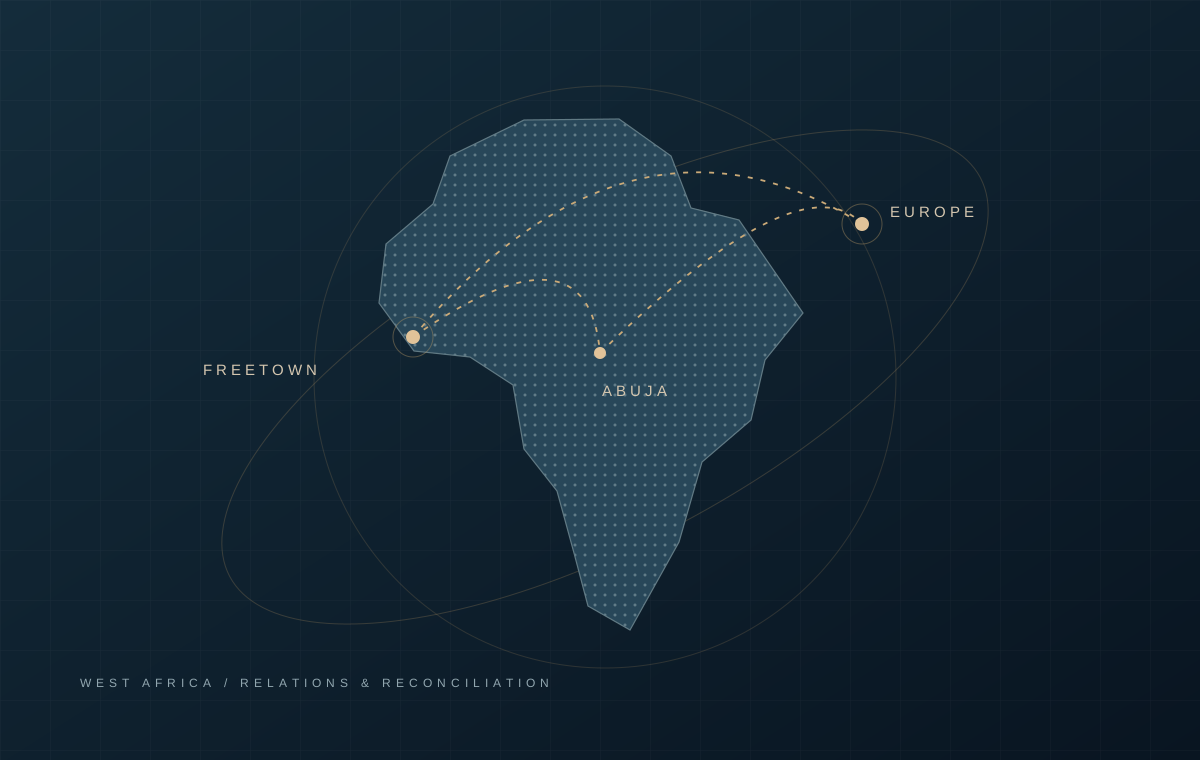
A homecoming can be a personal event, a political signal, or both. ECOWAS’s response to Ernest Bai Koroma’s return highlighted its regional dimension. The statement published on 8 September 2026 connects the Sierra Leonean authorities’ decision with reconciliation and thanks Nigeria for hosting Koroma and supporting his return.[1]
What the statement establishes
The Commission reports that the government decided to discontinue the case against the former president in the interests of peace and national unity. This is the organisation’s account: it does not replace the underlying judicial records or constitute an independent assessment of the allegations.[1]
A second statement, distributed by APO Group on behalf of State House, describes the subsequent meeting in Freetown. It records Koroma’s thanks to Bio and his willingness to contribute to national cohesion. It documents a commitment expressed at a meeting, rather than an outcome measured over time.[2]
From a decision to its follow-through
Together, the documents set out a sequence: a national decision, support from regional interlocutors, and a public meeting. That sequence helps explain the process without assigning it to a single protagonist.
What follows remains the open question. Reconciliation becomes more substantial when opportunities for dialogue become repeatable practices, when institutions retain their responsibilities, and when difficult issues can still be discussed. This is an interpretation of the process, not a prediction of its outcome.